Data Breach Investigations Report
For over a decade, the DBIR was the gold standard in cybersecurity reporting. Then readership plateaued.
Verizon's annual Data Breach Investigation Report had been published for 12 years—a 120-page deep dive into global cybersecurity threats that industry professionals relied on. But familiarity bred complacency, and engagement was flattening.
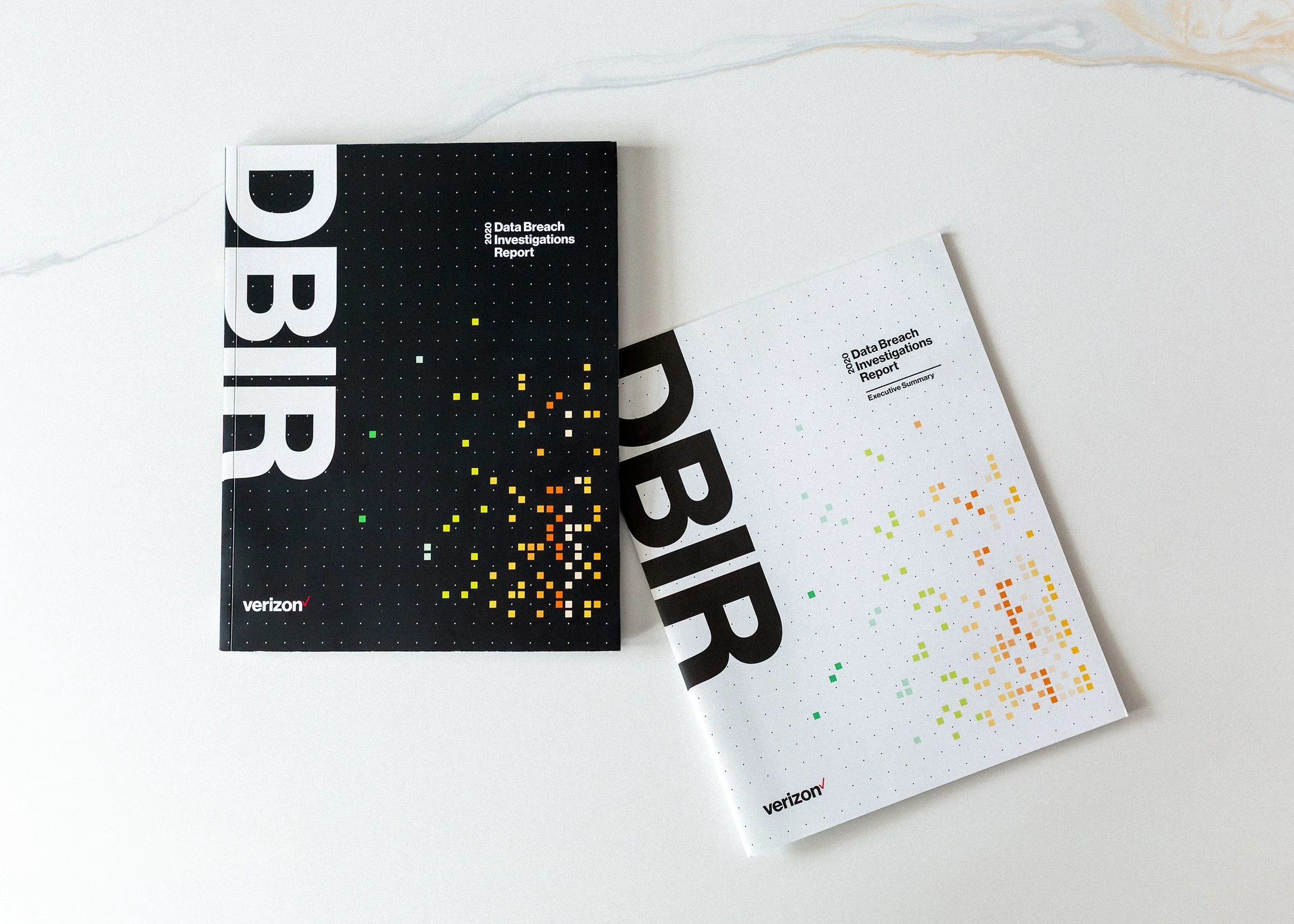
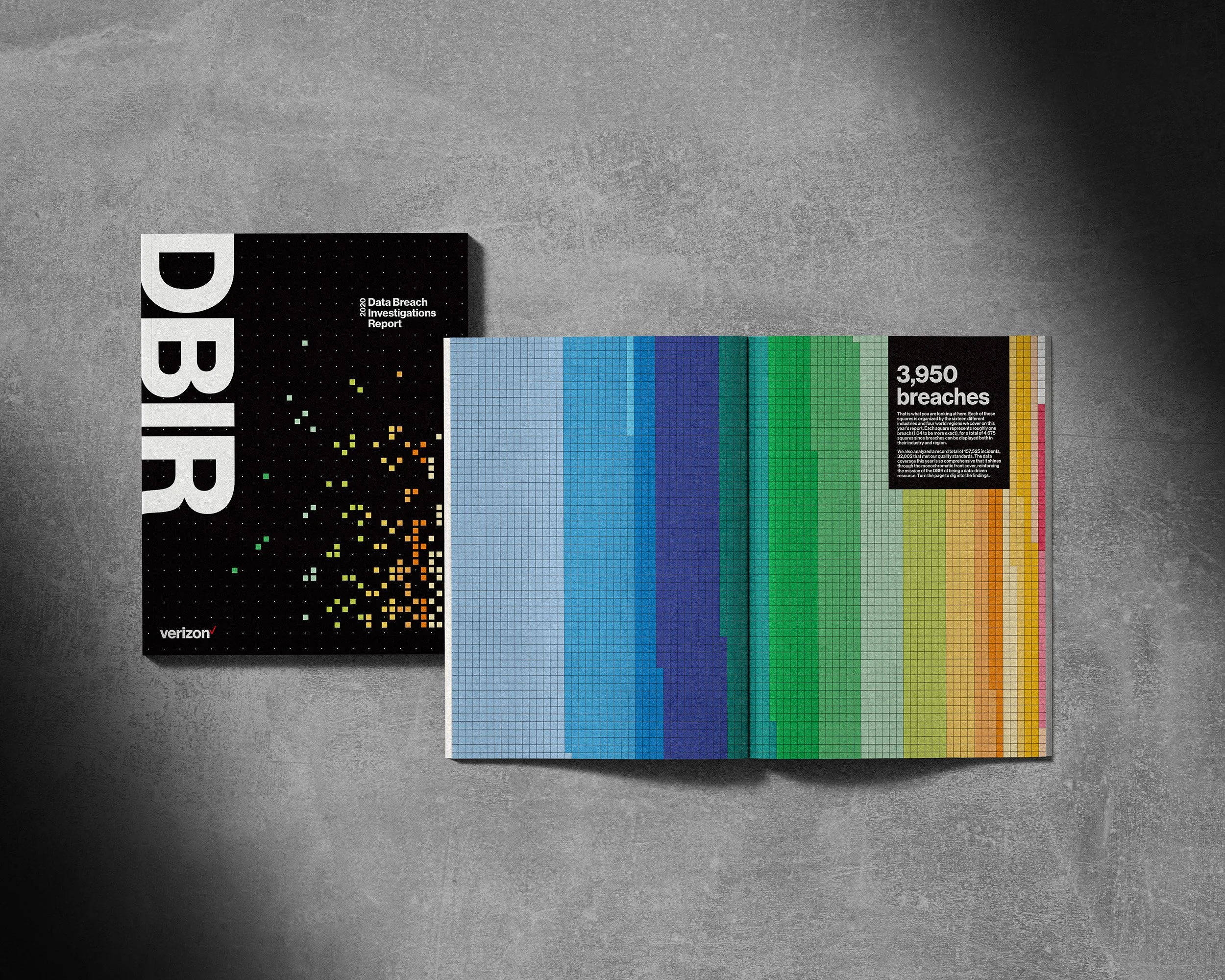
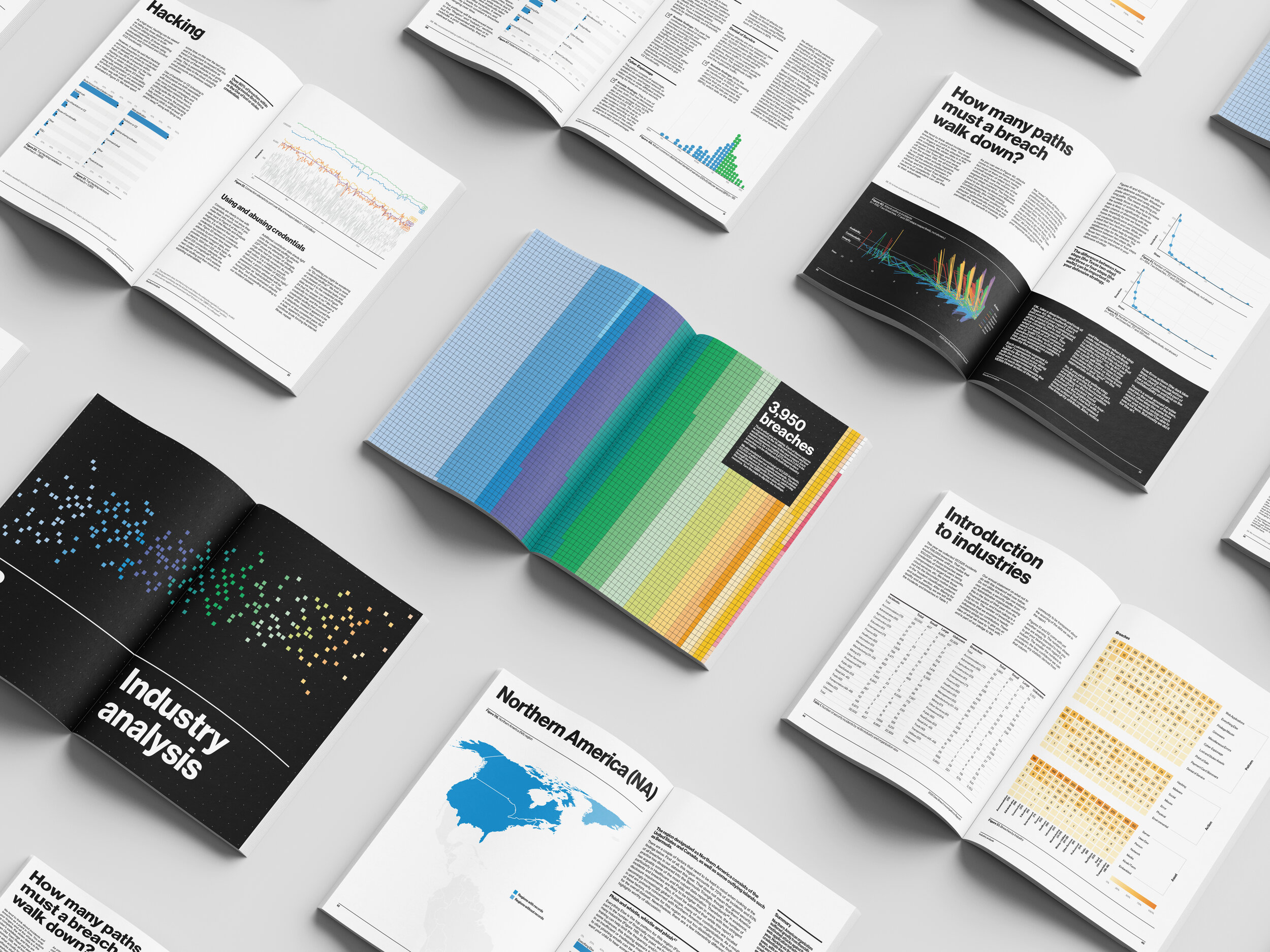
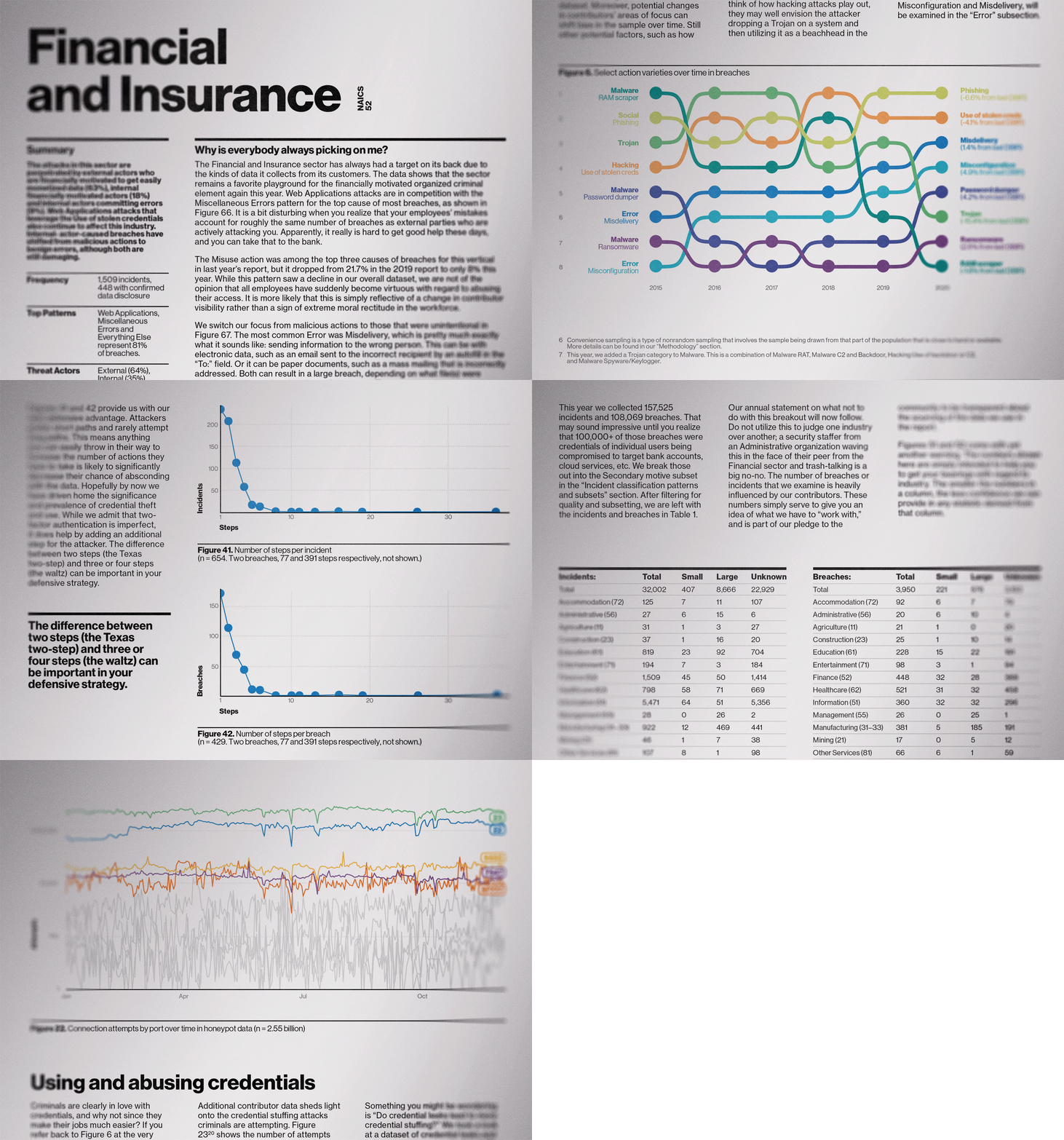
As lead creative for the campaign, I reimagined how to present dense research without dumbing it down. Instead of stock photography or decorative iconography, I let the data itself become the visual system—charts, graphs, and insights designed to be as compelling as they were informative. The approach extended across the full campaign: an executive summary, industry-specific vertical reports, infographics, webinar materials, contributor badges, and email assets. Every touchpoint reinforced the same idea: when your data is this good, it deserves to be the star.
The results proved it—site visits jumped 34%, leads increased 57%, and downloads nearly doubled.
-
Verizon (B2B)
-
Annual Report (Print & Digital), Thought Leadership Campaign, Content Marketing
-
Technology & Cybersecurity





Designed for print. Built for everywhere.
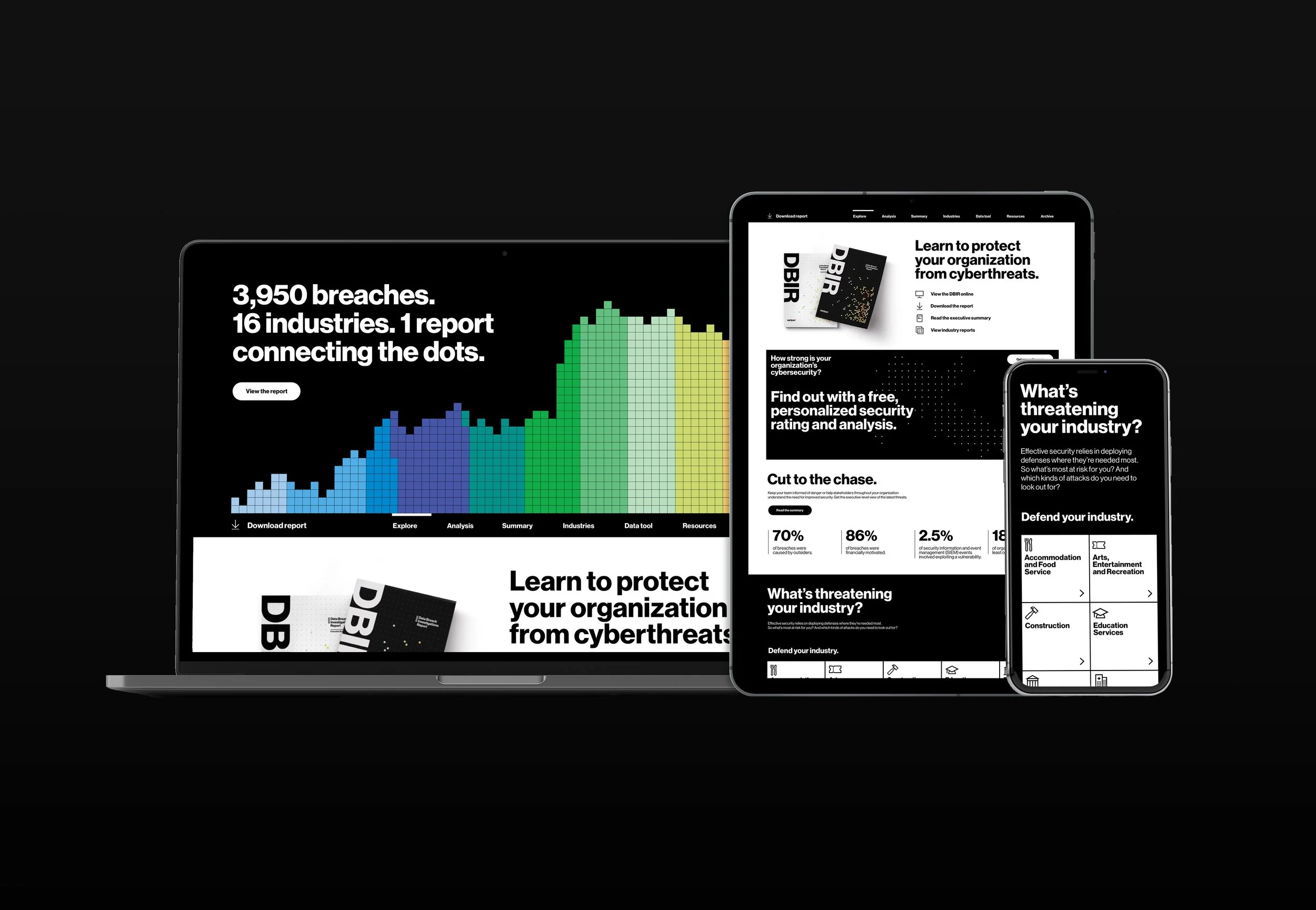
The DBIR has always been a printed publication—a tangible artifact that professionals across multiple industries would keep on their desks for quick reference. But this year, we designed the report to live everywhere: in US Letter and A4 print formats, but then reimagined for digital, where every chart became interactive, every source clickable, every layout responsive. Getting complex data scientist visualizations to feel intuitive across devices? That's where the real design magic happened.
I created an executive summary of the highlights for leaders who needed the story without the 120-page read. Then my team and I crafted 16 industry-specific vertical reports so professionals could zero in on their sector—from retail and healthcare to real estate and beyond. Each industry got its own color system but stayed visually tied to the core DBIR brand. All of it lived in a digital hub designed to feel exploratory, not overwhelming.
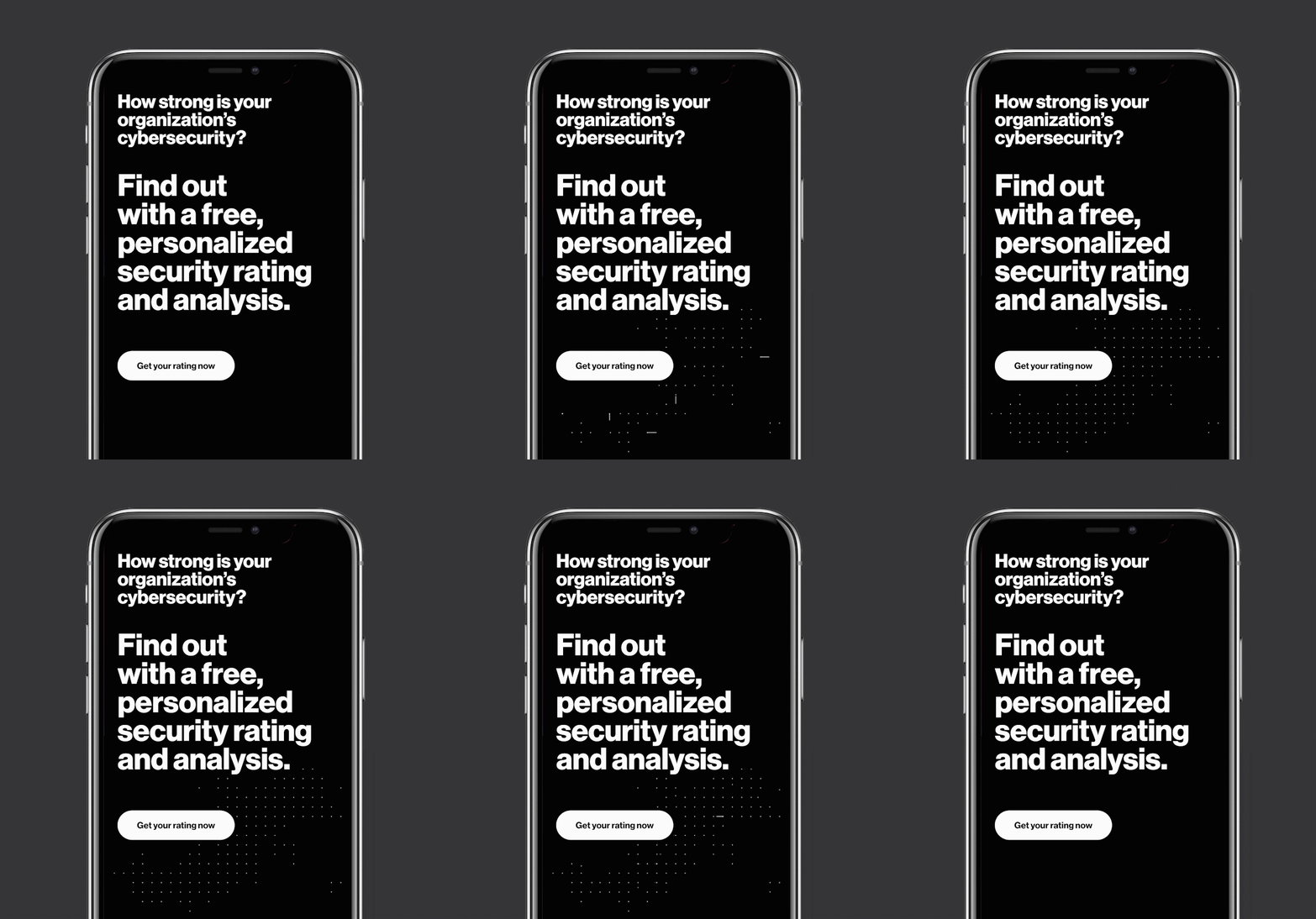
This year brought 81 contributing organizations—the most in DBIR history. Partners like the U.S. Secret Service, Center for Internet Security, and Dragos contributed data from over 32,000 security incidents across four global regions. That scale demanded a visual system flexible enough to handle it. Throughout every asset—webinar decks, social content, contributor badges, email campaigns—the philosophy stayed the same: let the data do the talking.

98% More Downloads
✦
57% More Leads
✦
98% More Downloads ✦ 57% More Leads ✦
The report’s new design and strategy paid off. The campaign yielded a 34% increase in site visits, a 57% increase in leads generated (with more qualified leads than ever before), and a 98% increase in downloads. It also snagged a silver at the B2 Awards for Thought Leadership.